
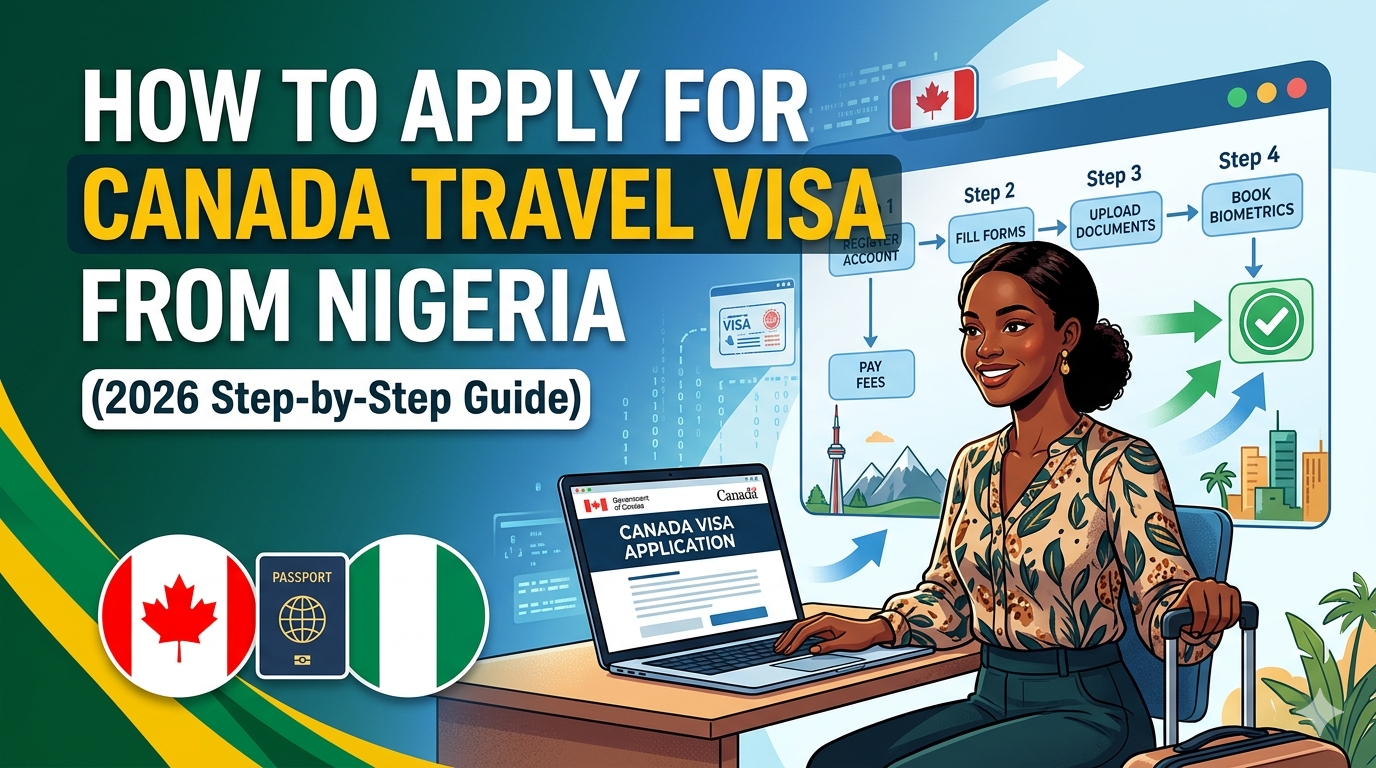
Canada remains one of the most sought-after travel destinations for Nigerians, whether for tourism, visiting family, attending conferences, or exploring opportunities. The country is known for its breathtaking landscapes, world-class cities, and welcoming culture. However, before you pack your bags, you need a Temporary Resident Visa (TRV), commonly called a Canada visitor visa.
The application process can feel overwhelming at first glance, but with the right information and a clear plan, it is entirely manageable. This guide walks you through everything you need to know about applying for a Canada travel visa from Nigeria in 2026, from understanding which visa you need to tracking your application after submission.
Understanding the Canada Visitor Visa
A Canada visitor visa is an official document placed in your passport that shows you meet the requirements to enter Canada as a temporary resident. As a Nigerian passport holder, you are required to obtain a visa before travelling to Canada. This is a Temporary Resident Visa (TRV), and it can be issued as a single-entry or multiple-entry visa.
A single-entry visa allows you to enter Canada once, while a multiple-entry visa allows you to travel in and out of Canada multiple times for as long as the visa remains valid, typically up to ten years or until your passport expires, whichever comes first. Most applicants in 2026 are issued multiple-entry visas if approved.
It is important to note that a visitor visa does not guarantee entry into Canada. Border Services Officers at the port of entry have the final authority to allow or deny entry based on the circumstances at the time of your arrival.
Who Needs a Canadian Visitor Visa?
All Nigerian passport holders need a visitor visa to enter Canada. There are no visa-exempt arrangements between Nigeria and Canada for regular passport holders. If you hold a valid United States visa or a permanent resident card from the United States, you may be eligible for an Electronic Travel Authorization (eTA) instead, but this applies only if you are travelling by air and meet specific conditions.
For the vast majority of Nigerians, the standard visitor visa application process applies.
Step 1: Determine the Right Visa Type
Before starting your application, confirm that a visitor visa is the right category for your purpose of travel. A visitor visa covers:
- Tourism and leisure travel
- Visiting family or friends
- Attending a business meeting or conference (without taking up employment)
- Receiving short-term medical treatment
- Attending a short academic course or program that lasts six months or less
If you intend to study for longer than six months, work, or immigrate, you will need a different type of permit or visa altogether.
Step 2: Gather Your Required Documents
Document preparation is arguably the most critical stage of your visa application. A well-prepared, complete application significantly improves your chances of approval. The following documents are typically required:
Passport and Travel History Your passport must be valid for at least six months beyond your intended stay in Canada. If you have previously held other passports, it is advisable to provide those as well, as they show your travel history to immigration-friendly countries.
Completed Application Forms You will fill out the IMM 5257 (Application for Visitor Visa) and, if applicable, IMM 5645 (Family Information). These forms are available on the official Immigration, Refugees and Citizenship Canada (IRCC) website.
Photographs You need two recent passport-sized photographs taken within the last six months. The photos must meet IRCC specifications, including a white background and specific dimensions.
Proof of Financial Support This is one of the most scrutinised parts of your application. You must demonstrate that you have sufficient funds to cover your stay in Canada without needing to work. This includes:
- Six months of bank statements (personal and/or business accounts)
- A letter from your bank confirming your account status
- Evidence of fixed assets, investments, or property if applicable
The general expectation is that you have a consistent, legitimate source of income and a healthy account balance.
Proof of Employment or Business Ownership If you are employed, include a letter from your employer stating your position, salary, length of employment, and the approved duration of your leave. If you are self-employed or run a business, provide your Certificate of Incorporation, business registration documents, and evidence of business activity such as contracts or financial statements.
Purpose of Travel Documents Depending on your reason for travelling, include supporting documents such as:
- An invitation letter from a host in Canada (if visiting family or friends)
- Hotel bookings or accommodation plans
- Flight itinerary (a booking, not necessarily a confirmed ticket)
- Conference or event invitation letters
Ties to Nigeria Canadian immigration officers want assurance that you will return to Nigeria after your visit. Evidence of strong ties to your home country strengthens your application. This can include property ownership documents, a family unit, employment, or business ownership.
Previous Visa Refusals If you have been refused a visa to Canada or any other country in the past, you are required to declare this. Failing to disclose previous refusals is considered misrepresentation and can result in a ban.
Step 3: Create an IRCC Account and Apply Online
As of 2026, most visitor visa applications from Nigeria are submitted online through the official IRCC portal. Here is how to proceed:
- Visit the official Government of Canada website at canada.ca/immigration.
- Create a GCKey account or sign in with a Sign-In Partner.
- Complete the online eligibility questionnaire. The system will generate a checklist of documents and forms specific to your situation.
- Fill in the application forms accurately. Double-check every field before submission.
- Upload all required documents in the accepted formats (PDF or JPEG, with specific file size limits).
- Pay the application fee.
The current visitor visa application fee is CAD 100 per person, with an additional CAD 85 biometrics fee for most applicants. Fees are non-refundable even if your application is refused.
Step 4: Provide Biometrics
As a Nigerian applicant, you are required to submit biometrics (fingerprints and a photo) as part of your application. After paying the biometrics fee, you will receive a Biometric Instruction Letter (BIL).
In Nigeria, biometrics collection is done at designated Visa Application Centres (VACs) operated by VFS Global. The main centres are located in Lagos and Abuja. You will need to book an appointment at a VAC and attend in person with your BIL, passport, and the required appointment fee.
Your biometrics remain valid for ten years once collected, so if you have previously submitted biometrics to IRCC and they are still valid, you may not need to provide them again.
Step 5: Attend a Medical Examination (If Required)
Not all visitor visa applicants are required to undergo a medical examination, but some are. You may need a medical exam if:
- You plan to stay in Canada for more than six months
- You have worked or lived in certain countries that require medical clearance
- You plan to work in certain occupations that involve contact with vulnerable populations
If a medical exam is required, you will be directed to visit an IRCC-designated physician (called a Panel Physician) in Nigeria. Do not book a medical exam until IRCC instructs you to do so.
Step 6: Submit Your Application and Wait for Processing
Once your application is complete, your documents are uploaded, biometrics are submitted, and fees are paid, your application enters the processing queue. In 2026, processing times for Nigerian applicants vary depending on application volume, completeness of the file, and individual circumstances.
You can check current estimated processing times on the IRCC website. As a general guide, online applications tend to be processed faster than paper applications. Processing can take anywhere from a few weeks to several months.
During processing, IRCC may contact you to request additional documents, attend an interview, or provide further clarification. Respond to any requests promptly and accurately.
Step 7: Track Your Application
After submission, you can log into your IRCC account to track your application status in real time. Status updates are posted as your file moves through various stages of review. You may see statuses such as “Application Received,” “In Process,” or “Decision Made.”
If your application is approved, IRCC will request your passport to affix the visa. You will be instructed on how to send your passport to the relevant processing centre or VAC.
What Happens If Your Application Is Refused?
A refusal is disappointing, but it is not the end of the road. The refusal letter will state the reasons your application was denied. Common reasons include:
- Insufficient proof of financial means
- Lack of strong ties to Nigeria
- Inadequate explanation of purpose of travel
- Incomplete documentation
- Previous immigration violations
You can reapply after addressing the concerns raised in the refusal letter. There is no mandatory waiting period before reapplying, but it is advisable to only reapply once you have meaningfully strengthened your application.
Practical Tips for a Stronger Application
Be honest and consistent. Any inconsistencies between your forms, supporting documents, and stated intentions can raise red flags for the reviewing officer.
Tell a clear story. Your application should paint a coherent picture of who you are, why you want to visit Canada, and why you will return to Nigeria. Each document should reinforce this narrative.
Show financial stability over time. A large deposit made just before your application looks suspicious. Officers prefer to see consistent, gradual account activity over several months.
Have a specific itinerary. A vague plan to “visit Canada” is less compelling than a clear schedule showing where you will stay, what you intend to do, and when you plan to return.
Use professional translation services. If any of your documents are not in English or French, they must be accompanied by a certified translation.
Final Thoughts
Applying for a Canada visitor visa from Nigeria in 2026 requires patience, careful preparation, and attention to detail. The process is largely online, which makes it more accessible than ever, but it also demands thoroughness and honesty at every stage.
Start your application well in advance of your intended travel date, gather all documents carefully, and present your case with clarity and confidence. With the right preparation, many Nigerians successfully obtain their Canadian visitor visas each year and go on to enjoy everything that Canada has to offer.
Good luck with your application.
